When the grocery store sits right on your drive or walk home, the usual advice to "only shop once a week" doesn't always fit. Whether a quick stop saves you money or costs you comes down to two things: what you carry in the store, and who you're feeding.
Part 1: The two-hands rule
Most advice says "stick to your list." But after a long workday, willpower is low, and stores are laid out to take advantage of that evening fatigue:
- Eye-level temptations. Prepared meals and bakery treats are often placed right where you look as you walk in.
- Smells near the door. Rotisserie chicken and fresh bread are hard to walk past at 5:30 p.m.
- The empty-cart effect. A full-size cart holds a lot. A bag of apples and a box of pasta look lonely in it, and many people feel a pull to fill the space.
What happens when you skip the cart
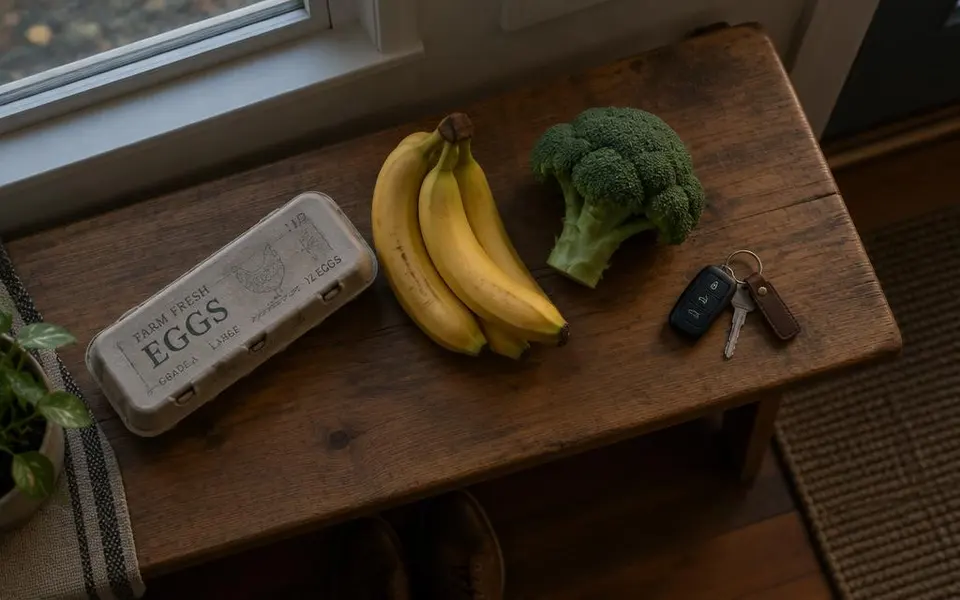
- Your hands become a spending limit. Without a cart or even a basket, you can comfortably carry a carton of eggs, a pack of chicken thighs and a head of broccoli. Once things start slipping, you want to head for the till.
- No wandering. Holding cold milk or heavy produce makes a detour down the snack aisle much less appealing. You take the shortest path from shelf to checkout.
- Checkout defence. It's hard to grab a chocolate bar or an energy drink when both hands are already full.
The rule: if you're stopping on the way home for tonight's dinner, don't take a cart or basket. If it doesn't fit in your two hands, it waits for another day.
Part 2: Single-person households vs. families
The best approach flips depending on household size. What saves a single person money can cost a family of four, and the other way around.
Living alone: why the big weekly haul is often a trap
For one person, food waste is the biggest hidden cost on the grocery bill. Smaller households tend to throw out a larger share of what they buy.
- The bulk trap. A family pack of chicken might be 25% cheaper per 100 g. But if two of the five breasts get forgotten and spoil, the real price of what you actually ate goes up, not down.
- Plans change. A late night at work, dinner with a friend or a takeout evening can undo a seven-day plan. Greens, berries and opened dairy are usually the first to go.
- Why the commute stop works for singles:
- You only buy fresh meat and produce you'll cook in the next day or two, so very little spoils.
- Your fridge stays clear, so leftovers don't get lost at the back.
- The condition: you have to keep the two-hands rule. Stopping four times a week with a cart, and adding a $6 drink or a bag of chips each time, can add $100 or more a month without you noticing.
Families of three to five: why daily stops add up
For a family, the maths reverses. Volume works in your favour, and time is the scarcest thing you have.
- Unit prices drive the budget. A family can go through a 4 L jug of milk in a few days and more than a kilogram of meat in one meal. Buying small, single-meal packages every evening means paying the highest price per gram.
- The dinner-panic surcharge. Stopping at 5:15 p.m. with no plan and hungry kids leads to the priciest options: pre-marinated meat, pre-cut vegetables and frozen convenience sides.
- Fatigue builds up. By Thursday, a parent who has stopped every day is more likely to give up and order delivery.
- Why the weekly haul works for families:
- You can make real use of front-page flyer deals, buying several packs of sale meat and freezing them.
- Cooking six portions takes about the same time and energy as cooking two.
Side by side
Single person
- Biggest cost: food that spoils before you eat it.
- Bulk buying risk: high (spoilage, freezer burn, getting tired of the same meal).
- Best approach: commute stops with the two-hands rule, buying fresh protein and vegetables every two or three days and keeping dry staples at home.
- Cart: never on a commute stop.
- Impulse risk: small, frequent extras of $4 to $8 per stop.
- Flyer use: single-item produce and pantry deals.
Family of three to five
- Biggest cost: price per gram and sheer volume.
- Bulk buying risk: low, since food is usually used up within a week or so.
- Best approach: one weekend anchor trip plus one mid-week top-up for milk and produce.
- Cart: a full cart for the weekly trip, no cart for the top-up.
- Impulse risk: convenience shortcuts and dinner panic, often $15 to $30 per stop.
- Flyer use: stock up on family-pack meat and staples.
The playbook
If you live alone or as a couple
- Stock core staples about once a month: rice, pasta, oats, oil, spices and frozen vegetables, ideally from a discount store.
- Shop your commute two or three times a week: walk in empty-handed, pick up tonight's protein and vegetables from whatever is on sale, and go straight to checkout.
If you're feeding a family
- Do one weekend anchor trip: build the week's dinners around the two cheapest sale meats, and buy dairy, bread and heavy produce at the same time.
- Limit commute stops to one a week: if you run out of milk, bananas or bread by Wednesday, send one person in with the two-hands limit, and get right back out.
Prices and percentages in this guide are examples to show how the maths works. Your savings will depend on your stores, your household and what's on sale near you this week.