When the grocery bill climbs, most of us look at the store first: which flyer, which coupon, which brand. But the cheapest place to start is your own kitchen. Before you buy anything, find out what you already own.
Why start at home?
Food you buy and never eat is money in the bin. The National Zero Waste Council estimates the average Canadian household wastes 140 kilograms of food a year, at a cost of more than $1,300 (Love Food Hate Waste Canada). Roughly 63% of the food Canadians throw away could have been eaten (Essex-Windsor Solid Waste Authority). Even a partial fix is real money for a family feeding kids.
That waste often comes from habits, not carelessness. Love Food Hate Waste notes that 23% of avoidable food waste is caused by misunderstanding "best before" dates (City of Toronto). Fruits and vegetables are the most commonly wasted edible foods, at about 45 kg per household per year (same source).
Step 1: Take inventory of your pantry and freezer
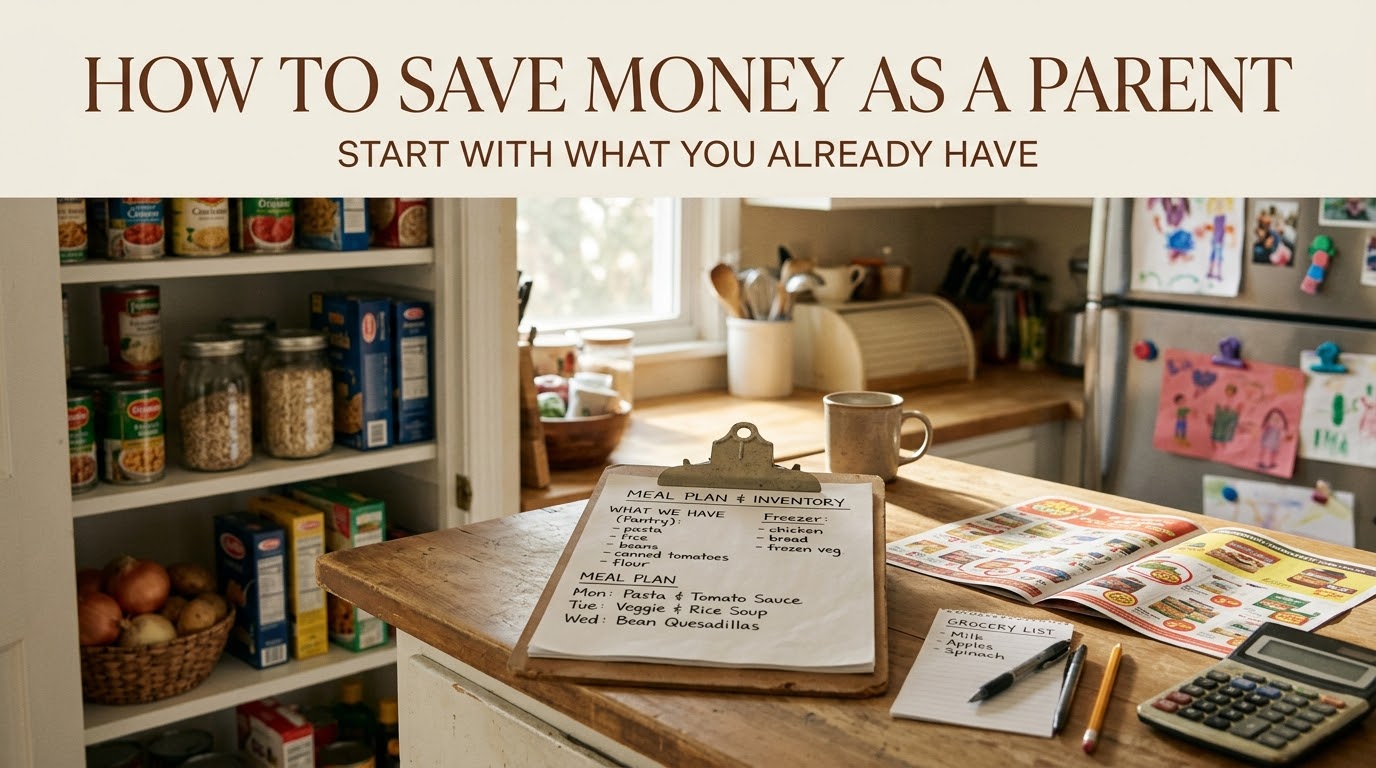
Set aside 15 minutes. Pull everything out of the freezer and scan the pantry shelves, then write a simple list in two columns:
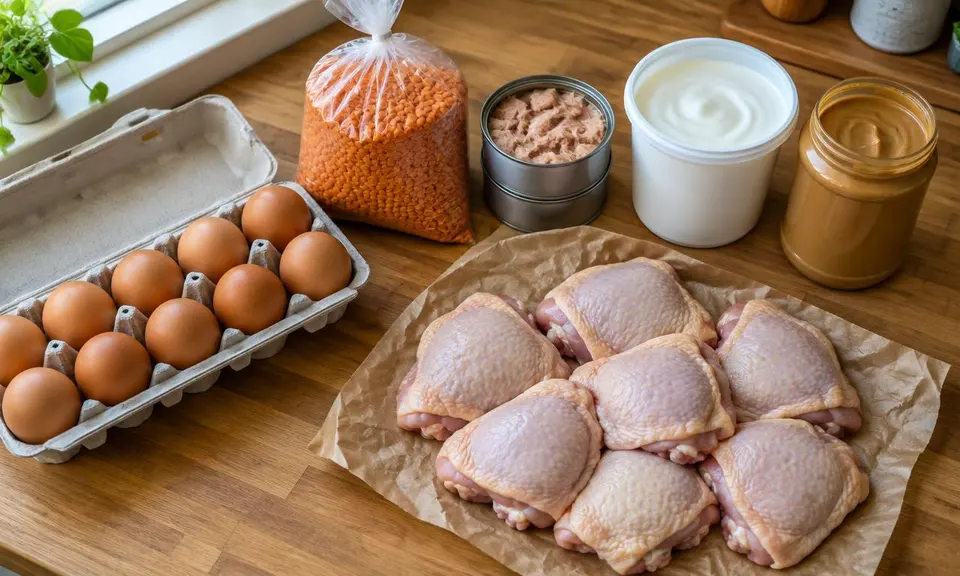
• Freezer: proteins (chicken, ground meat, fish), vegetables, bread, leftovers, anything you froze "for later."
• Pantry: grains and pasta, canned beans and tomatoes, sauces, baking staples, broth, spices.
Mark anything that needs to be used first: oldest items, freezer-burned items, and things close to their dates.
The freezer is more forgiving than most of us assume. The City of Winnipeg's food council says bread can last up to three months frozen, chicken up to nine months, and most vegetables eight months to a year (City of Winnipeg). That "old" bag of chicken may be perfectly fine to cook.
Step 2: Build a meal plan from what you have
Once the list is done, plan backwards from it:
- Pick a protein from the freezer for 3 to 4 dinners (move it to the fridge the night before to thaw).
- Pair each with a pantry base: rice, pasta, tortillas, potatoes, or beans.
- Add vegetables from the freezer or fridge, using the soon-to-spoil ones first.
- Plan one "use it up" night for leftovers and odds and ends: soup, fried rice, quesadillas, or a sheet-pan dinner.
- Write the plan on the fridge so the whole family can see it, which helps when four kids are all asking "what's for dinner?"
Then make a short shopping list of only the gaps: the one or two things that turn your ingredients into complete meals.
Step 3: Stuck for ideas? Let the flyers do the work
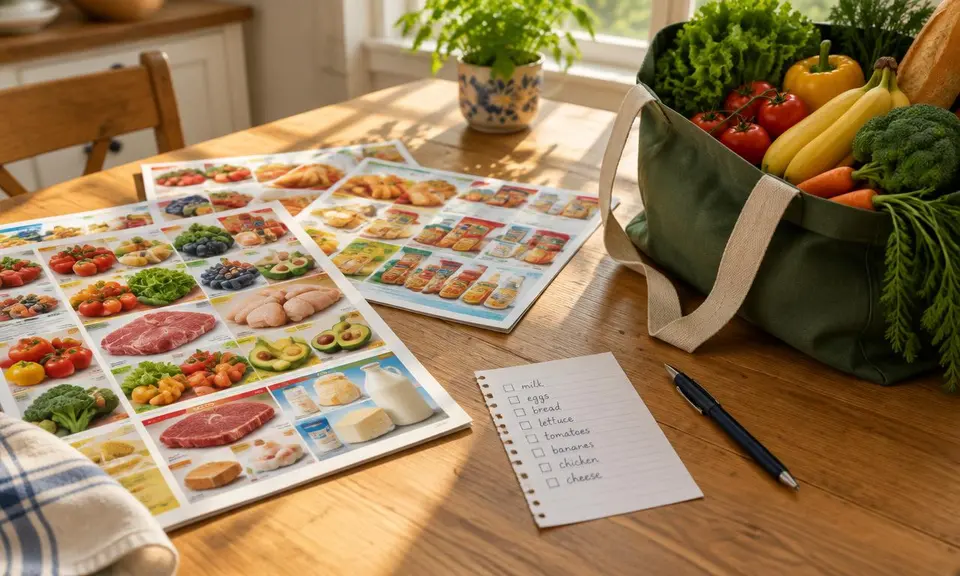
If your list leaves you without a plan, use curated flyer meal plans. These are built around what is on sale this week, so they tell you which meals will be cheapest in your area.
ShoppedOut.ca is the site to check for meal plans matched to flyer deals in your area.
A few tips for using flyers well:
• Look for at least three deeply discounted items in one store's flyer and shop there that week, which keeps you focused and helps your meal planning.
• Build the menu around the deals, starting with the protein on sale, rather than forcing deals into a menu you'd already planned.
• Buy extra when a staple is cheap and freeze it, since your freezer inventory will tell you what you have room for.
Keep it simple
You don't need a perfect system. Check what you have, plan 4 to 5 dinners around it, fill only the gaps, and use flyers when you need inspiration. With busy kids and a packed schedule, the best plan is one you will actually follow.
Sources
• Love Food Hate Waste Canada, "Food Waste in the Home": https://lovefoodhatewaste.ca/about/food-waste/
• Essex-Windsor Solid Waste Authority, "Food Waste": https://ewswa.org/composting-food-waste/food-waste
• City of Toronto, "Food Waste": https://www.toronto.ca/services-payments/recycling-organics-garbage/waste-management/waste-reduction/food-waste/
• City of Winnipeg, "Household food waste": https://legacy.winnipeg.ca/clerks/boards/WpgFoodCouncil/foodwaste.stm