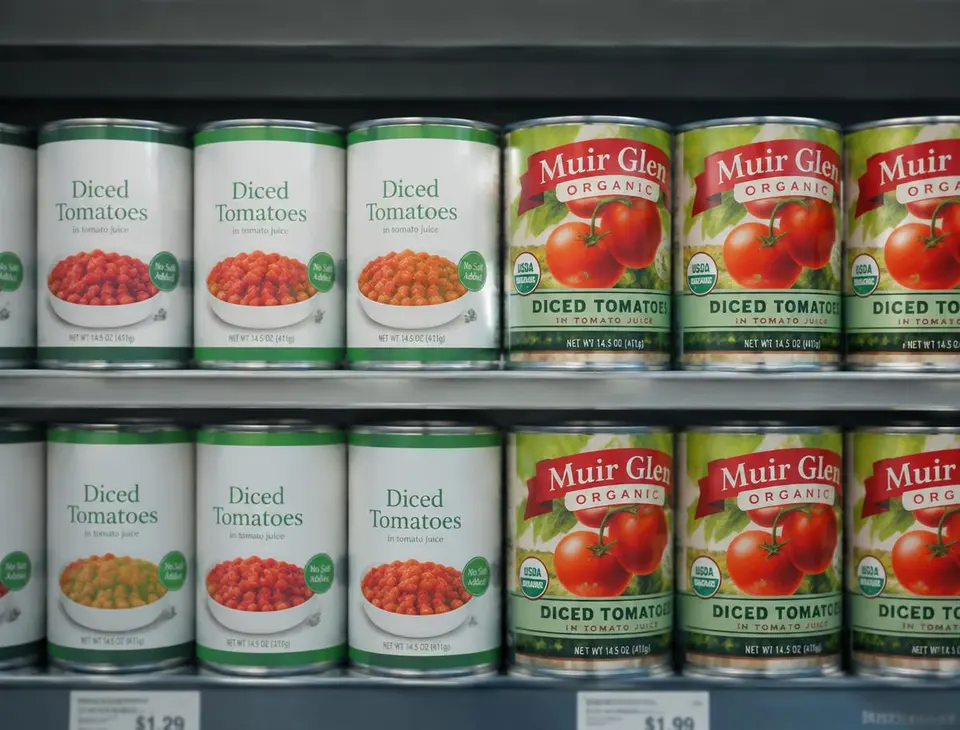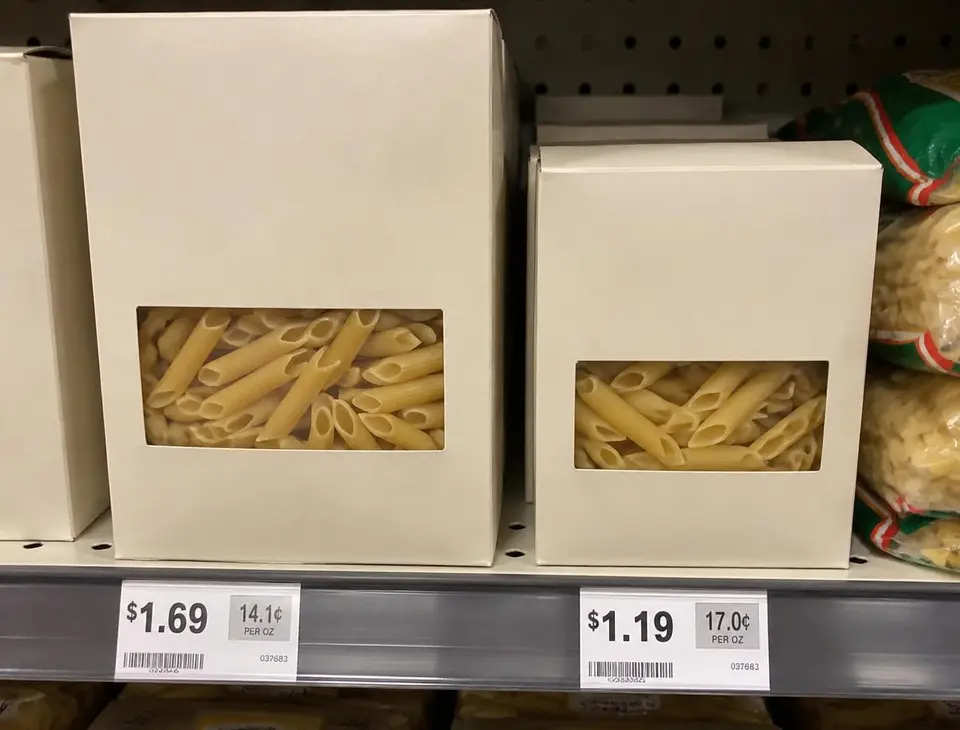
Package sizes vary widely between stores and brands, so the sticker price alone is often misleading. The unit price tells you what you are really paying.
What a unit price is
Canadian grocery shelves normally show a unit price in small print on the shelf tag: the cost per 100 grams, per 100 millilitres, per kilogram or per item. It puts different sizes on equal terms.
A quick example
One box of pasta costs $2.50 for 500 g and another costs $3.60 for 900 g.
- First box: $2.50 ÷ 5 = $0.50 per 100 g
- Second box: $3.60 ÷ 9 = $0.40 per 100 g
The bigger box costs more up front but is cheaper per gram.
The four-step method
- Find the small unit-price label on the shelf tag.
- Compare the same product, or the closest equivalent, across brands and sizes.
- Factor in any current sale price.
- Decide based on the unit cost of what you will actually use.
Where it matters most
Cereal, pasta, rice, cooking oil, cheese, meat, coffee and cleaning products have the widest gaps between sizes and brands.
Watch for these traps
- Mixed units: one tag shows per 100 g, the next per kg.
- Sale tags that cover up the unit price.
- Shrinking packages at the same sticker price.
- Multi-buys like "2 for $5" that only help if you use both.
How ShoppedOut uses it
ShoppedOut applies the same unit-price logic when comparing your whole list across nearby stores, so you do not have to do the math aisle by aisle.
Sources
- Statistics Canada, Monthly average retail prices for selected products
- General consumer guidance on unit pricing practices in Canadian retail