Cheap meals don't have to be bland meals. Rice, beans, eggs, potatoes and cabbage are affordable, but what makes people want to eat them again and again is seasoning. A small collection of spices is one of the best investments a budget kitchen can make, and you don't need to buy them all at once.
Start with the basics
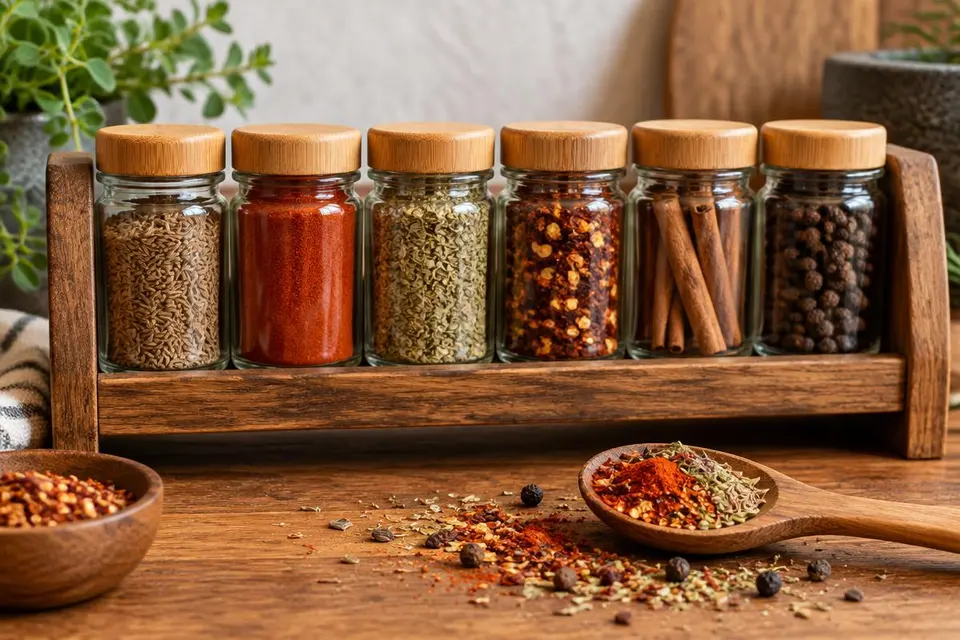
If you are starting from nothing, these cover a huge range of meals:
- Salt and black pepper. The foundation of everything.
- Garlic powder. Handy when fresh garlic runs out.
- Onion powder. Adds depth to rubs and sauces.
- Paprika (sweet or smoked). Colour and warmth for chicken, potatoes and eggs.
- Chili powder. Essential for chili, tacos and bean dishes.
- Ground cumin. Earthy flavour for Mexican, Middle Eastern and Indian-style dishes.
- Dried oregano. For tomato sauces, pizza and Greek-style dishes.
- Italian seasoning or dried basil and thyme. For pasta, soups and roasted vegetables.
- Cinnamon. For oatmeal, baking and some savoury stews.
- Chili flakes. A little heat for pasta, pizza and stir-fries.
With these ten, you can make chili, tacos, curries, pasta sauces, roasted vegetables, soups and baked goods.
Add as you go
Instead of buying a whole rack, add one new spice when a recipe you want to make calls for it. Over a few months your collection grows around the food you actually cook. Good next additions include curry powder, ground ginger, turmeric, coriander, bay leaves, dried rosemary and nutmeg.
Where to save on spices
- Compare unit prices. Small glass jars can cost several times more per gram than bags or larger plastic containers.
- Try bulk bins. Some stores sell spices by weight, letting you buy just a few tablespoons of something you'll rarely use.
- Look in the international aisle. Spices sold in bags in the international foods section are often much cheaper per gram than the same spice in the baking aisle.
- Choose store brands. Spices are a category where store brands are usually just as good.
- Refill jars. Keep the glass jars you have and refill them from bags.
Blends versus single spices
Pre-mixed blends like taco seasoning, curry powder or Italian seasoning are convenient. They can be good value if you use them often. But single spices are more flexible, and you can mix your own blends cheaply. For example, a simple taco seasoning is chili powder, cumin, garlic powder, onion powder, paprika, oregano, salt and pepper.
How to store spices
Heat, light, air and moisture make spices lose flavour faster. To make them last:
- Keep them in a cool, dark cupboard, not above the stove.
- Close lids tightly after use.
- Don't shake jars directly over a steaming pot, which lets moisture in.
- Write the purchase date on the jar.
Ground spices generally keep their best flavour for about a year or so, and whole spices longer. They don't usually spoil, but they slowly lose strength. If a spice has little smell when you rub a pinch between your fingers, it's time to replace it.
Fresh herbs on a budget
Fresh herbs can be expensive and spoil quickly. A few ways to save:
- Buy only what a recipe needs, or choose potted herbs you can keep on a windowsill.
- Freeze chopped herbs in ice cube trays with a little oil or water.
- Swap in dried herbs: about one teaspoon of dried for one tablespoon of fresh is a common rule of thumb.
Spices and your grocery list
In ShoppedOut, seasonings like salt, pepper and dried spices are listed on your shopping list but not priced, because most kitchens already have them and a jar lasts many meals. Check your cupboard before you shop and only add the ones you are actually out of.
Small cost, big difference
A few dollars of spices can turn the same rice and beans into Mexican-style burrito bowls one night and an Indian-style curry the next. That variety is what makes a budget menu sustainable for the long run.