Most major grocery chains in Canada run a points program. Loblaw-owned stores such as Superstore, No Frills and Shoppers Drug Mart use PC Optimum. Sobeys-family stores such as Sobeys, Safeway, FreshCo and Foodland use Scene+. Many other chains and co-operatives have their own programs or member rebates. Used well, these programs give back a small but real share of what you already spend. Used badly, they nudge you into buying things you would not otherwise buy.
How grocery points usually work
The details differ between programs and change over time, so always check the program's own website for current rules. In general:
- Base points: you earn a small amount for every dollar spent, often worth well under 1% of your purchase.
- Bonus offers: personalised offers in the app give extra points for specific products or for spending a set amount. This is where most of the value lives.
- Redemption: points are redeemed at a fixed rate for dollars off your bill, usually in set blocks.
- Partner earning: some programs let you earn on gas, pharmacy purchases, credit cards or travel.
What points are really worth
The easiest way to judge any offer is to convert points into dollars. If a program redeems 10,000 points for $10, each point is worth one-tenth of a cent. An offer of 2,000 bonus points on a $6 box of cereal is worth $2, which is the same as a $2 sale. That is useful, but only if you were going to buy that cereal anyway and it was not cheaper elsewhere.
Rule 1: Price first, points second
A product that costs $1.50 more to earn $1 in points is a loss. Compare the shelf price, or better, the unit price, before you look at the points. Points are a tiebreaker, not a reason to buy.
Rule 2: Load offers before you shop
Most programs require you to load or activate personalised offers in the app before checkout. Make it part of your list-making routine: open the app, load anything that matches your list, ignore everything else.
Rule 3: Watch spend thresholds carefully
"Spend $75, get 5,000 points" can be a good deal if your normal trip is $70 and you need one more staple. It is a bad deal if it pushes a $50 trip to $75 with snacks you didn't plan on. Do the maths: in this example, 5,000 points might be worth about $5, so spending an extra $25 on things you don't need costs you $20.
Rule 4: Don't let points lock you into one store
Points can make one store feel cheaper than it is. If another store's total for your list is meaningfully lower, the points rarely make up the difference. Compare totals first. ShoppedOut compares your whole list across nearby stores so you can see the real difference before points enter the picture.
Rule 5: Redeem regularly
Points sitting in an account do nothing for your budget, and programs can change their rules. Many shoppers redeem whenever they reach a round amount and treat it as a discount on that week's groceries. Others save points for a big holiday shop. Either works, as long as you actually use them.
Stacking points with sales
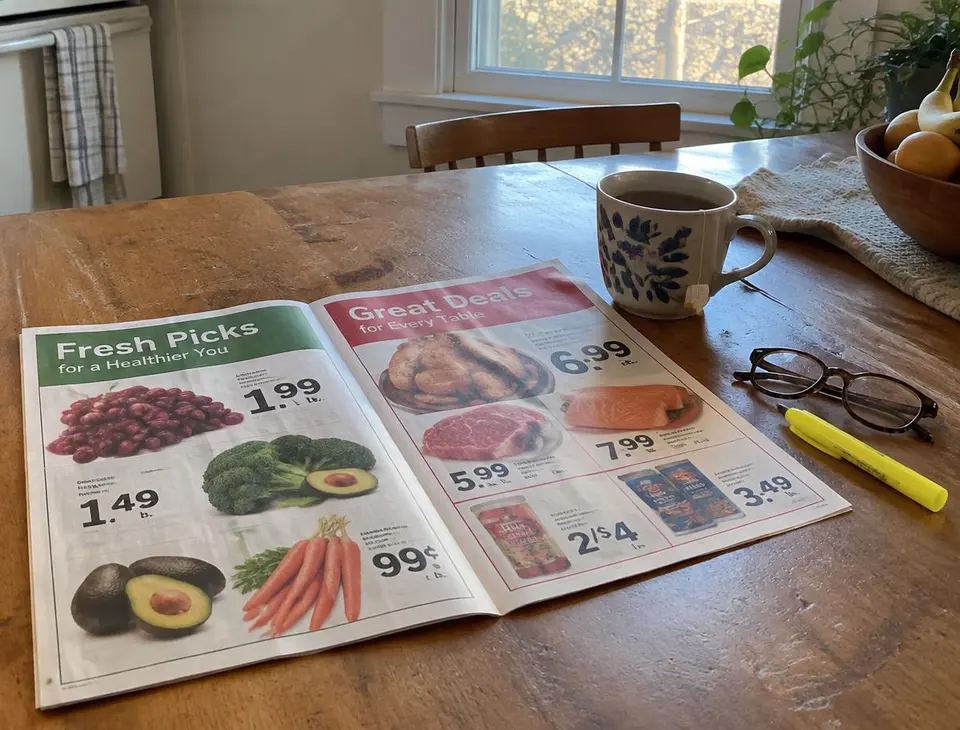
The best value comes when three things line up: the item is on your list, it is on sale in the flyer, and there is a points offer on it. That is a genuine triple win. These moments are also the best time to stock up on non-perishable staples or freezer items you use often.
Privacy trade-offs
Loyalty programs collect detailed data about what you buy, and that data is what makes the personalised offers possible. Read the program's privacy policy so you understand what is shared and with whom. You can usually limit marketing emails and some data sharing in your account settings.
The bottom line
Grocery points are a small rebate on spending you would make anyway. Collect them, load offers that match your list, redeem them regularly and never let them override the price on the shelf. Your list and the store total should drive every trip.